Showing posts with label Catholic. Show all posts

Sunday, July 2, 2023

Excessive Righteousness 1: Sodom, et. al.


“We’re here, we’re queer, we’re coming for your children.”

(Queer March Chant, 6/25/23)


In late June, the chant quoted above was shouted by marchers in the Queer March in Manhattan. NBC News defended the chant, saying that it had been “used for years at Pride events.” Not true. The chant “we’re coming for your children” originates from lyrics sung by the San Francisco Gay Men’s Choir in 2021 (https//thepostmillennial.com/nbc-news-defends-were-coming-for-your-children-chant-at-nyc-drag-march-arguing-its-been-used-for-years-at-pride-events). Other lyrics from that song are: “We’ll convert your children, happens bit by bit, quietly and subtlety and you will barely notice it” (https://www.standingforfreedom.com/2021/07/gay-mens-choir-performs-song-with-the-lyrics-were-coming-for-your-children/). NBC News implies that it’s just gays joking about this unfounded charge leveled against them, but that’s not really true, either. We have only to look at Walt Disney World, in my own back yard, to see that this is not a joke. The LGBTQ+ movement is very serious about converting your children.


They are also serious about quieting any resistance from you. Corporation after corporation is being enlisted in an effort to “normalize” what was generally considered “abnormal” behavior a few short decades ago. The corporations and colleges have DEI codes and re-education programs to ensure that their employees and professors fall in line with their new “normal.”


“UNLESS YOUR RIGHTEOUSNESS EXCEEDS … [SODOM]” (Matthew 5:20)


If Mark’s Gospel is the Gospel of Extreme Self-Denial and Luke’s Gospel is the Gospel of Extreme Impoverishment and John’s Gospel is the Gospel of Extreme Faith, then Matthew’s Gospel is the Gospel of Extreme Righteousness. Only Matthew (in 5:20 NKJV) records Jesus’ warning: “Unless your righteousness exceeds the righteousness of the scribes and Pharisees, you will by no means enter the kingdom of heaven.” Righteousness that EXCEEDS can be called “Excessive Righteousness,” the main title of the next several blogposts in this series. While Luke’s account of the Beatitudes states: “Blessed are you who hunger now, For you shall be filled” (Luke 6:21 NKJV), Matthew 5:6 (NKJV) states: “Blessed are those who hunger and thirst for righteousness, For they shall be filled.” Along with Matthew, the very first New Testament book written, according to J. A. T. Robinson (the book of James), emphasizes personal righteousness. As Jesus’ own brother, James corroborates how important “righteousness” was to Jesus. The concept of righteousness permeates Jesus’s Sermon on the Mount in Matthew. Since our righteousness must exceed the righteousness of the Pharisees in order for us to enter the kingdom of heaven, we will be considering the righteousness of the Pharisees in the next few blogposts, for comparison.


It is no great leap to suggest that, if our righteousness must exceed the righteousness of the Pharisees, it must most certainly exceed the righteousness of the inhabitants of Sodom. You may be currently attending a church that welcomes LGBTQ+ activities. The Roman Catholic Church released a document on June 20, 2023 stating: “Roman Catholic bishops should discuss how the Church can be more welcoming to LGBTQ+ people” (https://news.yahoo.com/vatican-document-urges-talks-welcoming-123153676.html?fr=sycsrp_catchall). Other denominations have already been more welcoming: Association of Welcoming & Affirming Baptists (AWAB), Affirming Pentecostal Church International, Episcopal Church (United States), Evangelical Anglican Church In America (EACA), Alliance of Baptists, Cooperative Baptist Fellowship (CBF), Evangelical Lutheran Church in America (ELCA), United Methodist Church (UMC), Global Alliance of Affirming Apostolic Pentecostals (GAAAP), Gay Apostolic Pentecostals, Presbyterian Church (USA), Christian Church (Disciples of Christ), Reformed Church in America (RCA), United Church of Christ (UCC), Friends General Conference (FGC), Mennonite Church USA (MC USA), to name a few (https://en.wikipedia.org/wiki/List_of_Christian_denominations_affirming_LGBT_people). One might suggest that there is a difference between engaging in such sexual sin and tolerating or supporting or welcoming those who do so engage. Nevertheless, those in Sodom who stormed Lot’s home in order “to (carnally) know” the angels who were his guests may have been a minority of the citizenry of Sodom (since, for instance, the city also contained women, yet, no women were mentioned as being guilty of the active crime). These remaining citizens, however, apparently tolerated or supported or welcomed those who so engaged. Genesis 18:19 states that Abraham’s family should “do righteousness,” but in Genesis 18:24, Abraham negotiates with God to save the city of Sodom, if there were only 50 “righteous” in it. Then, Abraham re-negotiates for saving the city if there were only 45 “righteous” (verse 28), then 40 (verse 29), then 30 (verse 30), then 20 (verse 31), then 10 (verse 32). Hence, the “unrighteous” included many who did not seek to commit the sin against the angels, but the entire city was destroyed with fire and brimstone (except for Lot, his wife, and two daughters).


“UNLESS YOUR RIGHTEOUSNESS EXCEEDS … [ISLAM]” (Matthew 5:20)


Exceeding the righteousness of the inhabitants of Sodom sets the bar pretty low, but what if the bar is set at a level that many Christians look down on: Islam? There certainly are Muslims who engage in atrocious behavior, such as the Islamic terrorists who murder innocents, and hate Christians and Jews. Nevertheless, I had many Muslim students who took my courses at Loyola University Chicago, in the 1990s. Far from hating me, they loved me as a professor, perhaps, because I took a stand in my classes for morality. They agreed with my position that we should not drink alcohol. They agreed that we should practice sexual purity. They agreed that abortion was unacceptable. They agreed that God should be revered. Although I had fewer Muslim students at Florida State University, I found that they also agreed with my positions on these matters. Although not all Muslims resist the LGBTQ+ movement, most Muslims do. “Muslim parents delivered passionate speeches against elementary schoolchildren in Maryland's Montgomery County Public Schools being forced to learn LGBTQ sexuality curriculum against parents' wishes at a [June 27, 2023] school board meeting” (https//www.msn.com/en-us/news/us/muslim-activist-gives-powerful-speech-against-forced-lgbtq-curriculum-our-people-are-not-backward/ar-AA1d9jdD).


This is consistent with Islamic teaching throughout the world. An opinion piece in the Islamic publication al-Jazeera put it this way:

As Muslims, we refuse to be coerced into believing something our faith categorically condemns. This is not a political stance. It is a moral principle.  A recent statement … titled “Navigating Differences: Clarifying Sexual and Gender Ethics in Islam”, has been signed and endorsed by more than 300 Islamic scholars and preachers across North America. In this document, we explicitly and clearly lay out the non-negotiable, normative Islamic position on sexuality and gender ethics (https://www.aljazeera.com/opinions/2023/6/19/muslims-opposed-to-lgbtq-curricula-for-their-kids-arent-bigots).

The intolerance of Muslims, here, is a good example for Christians to follow. Stepping away from LGBTQ+ issues, for a moment, look at the morality of drinking alcohol. Islam condemns it. The university with which I am currently affiliated—Liberty University—also opposes it. “Liberty University’s code of conduct, known as the Liberty Way, prohibits the consumption of alcohol for all students living on or off campus. This policy applies not only to those under the age of 21, but also those who are 21 and older.” Mormons also oppose it, but an overwhelming majority of evangelical churches (including the one I have attended for the past decade) now accept it. I have had debates with the preachers and elders of my church and have succeeded, at least, in discouraging their preaching from the pulpit the acceptability of drinking. Between 1920 and 1933, Prohibition was the law of the land—and the consensus agreement of Christians throughout the U.S. Nevertheless, as things now stand, there is a good possibility that, in this area (and even in the LGBTQ+ area), the righteousness of Muslims exceeds the righteousness of Christians.


“UNLESS YOUR RIGHTEOUSNESS EXCEEDS … [PHARISEES]” (Matthew 5:20)


Jesus, however, is not satisfied with our righteousness exceeding the Muslims or the citizens of Sodom. He demands that our righteousness exceeds that of the Pharisees. Put away the anti-Pharisee prejudice instilled in you by Sunday School for the next several posts and, with me, look afresh at the impressive righteousness taught by the Pharisees. This is the bar that we must exceed. This is the standard above which we must rise. There are 613 commandments adhered to by the Pharisees. We will consider them, as we look at the Laws the Old and New Testaments impose upon us. The process should result in our being much humbler, rather than our thinking of ourselves as “holier than thou.” One can have “excessive righteousness” without being “holier than thou.”

Saturday, September 19, 2020

Apocalyptic? #10: They're Digging in the Wrong Place (Rev. 1:4a)


4 John,

To the seven churches in the province of Asia


(Revelation 1:4a NIV)


Inside Address and Return Address


4 John  No doubt, this book is written by John—but which John?  Not the same John as the one who wrote the Gospel or the same person as the one who wrote I John, II John, or III John.  This John writes in Greek, but thinks in Hebrew.  Not so for the writer of the fourth Gospel, who writes in very clear Greek, or any of the three letters attributed to John.  The author, a Jewish Christian prophet known only by the name John, was adept at the use of figurative language.  Some Revelation scholars (primarily, source-theorists) believe that the book was written by several different authors.  The frustration associated with reading source-theorists (those who believe the book is compiled by various authors using various sources at various times) is the scholarly consensus that Revelation's unique grammar argues convincingly that it was written by a single author at a particular time.  While earlier fragmentation-based theories (or source-theories) of authorship have survived, the majority view now holds that the work is a unity by one author.  Evangelicals should happily accept this scholarly conclusion:  John is the only author of Revelation.  In I John 1:1-4, the (unnamed) author claims multiple times to have seen, heard, and touched Jesus.  These are apostolic credentials, even though no apostleship is specifically claimed by the author.  The Gospel of John identifies its author as “the disciple whom Jesus loved”: 

“20 Peter turned and saw the disciple whom Jesus loved following them . . . 24 This is the disciple who is bearing witness about these things, and who has written these things, and we know that his testimony is true” (John 20:20-24 ESV).


The evidence that this disciple whom Jesus loved is the Apostle John is found in John 13:23, 19:26, 20:2, and 21:7, in addition to 20:20.  The author of II John and III John identifies himself only as “The Elder.”  Only in Revelation, of these all so-called “Johannine” writings, does the author identify himself as “John.”  The reader of this blog is certainly free to disagree with me with regard to the authorship of Revelation (it really doesn’t change any part of the perspective I am offering), but I believe that the Gospel of John and I John were written by the Apostle John.  I believe that II John and III John were written by someone (possibly, but not necessarily, named “John”) who was a disciple of the Apostle John and who received a spiritual gift of “eldership” through the laying on of the Apostle John’s hands.  (Note that, according to II Timothy 1:6 and I Timothy 4:14, Timothy received a miraculous spiritual gift of “eldership” by the laying on of the Apostle Paul’s hands.  See my blogpost “The Logic of Christianity 17:  And Batting Cleanup:  The Holy Spirit.”)  John the author of Revelation claims to have the spiritual gift of “prophecy” (which he surely received by the laying on of hands of an apostle [see Acts 8:18], possibly the Apostle John).  All books in the New Testament not written by Apostles were written by individuals with such miraculous spiritual gifts:  evangelists, prophets, elders, etc.  These gifts were administered by the laying on of the hands of apostles; therefore, all of the New Testament books may be called the Apostles’ Doctrine (Acts 2:42).  This is what certifies the infallibility of all New Testament books.  Henry Chadwick, in The Early Church, writes: “Sixty or seventy years later, Ignatius was speaking of Antioch and the Asian churches as possessing a monarchical bishop, together with presbyters and deacons.  In his time, there were neither apostles nor prophets” (p. 46).  Whether the John of Revelation is John the Prophet, John the Elder, or John the Apostle, his testimony is inspired of God (and, therefore, Apostle’s Doctrine) and should be considered infallible by believers.  As a believer, therefore, I reject Adela Yarbro Collins’s assertion that the crisis addressed in Revelation is more perceived than real, i.e., that the writer of Revelation was mistaken in his prophecy.  Prophets who were mistaken in their prophecy were condemned in Ezekiel 13.  Such false prophets were condemned to death by God in Deuteronomy 18:20-22:


20 But a prophet who presumes to speak in my name anything I have not commanded, or a prophet who speaks in the name of other gods, is to be put to death.”

21 You may say to yourselves, “How can we know when a message has not been spoken by the Lord?” 22 If what a prophet proclaims in the name of the Lord does not take place or come true, that is a message the Lord has not spoken.

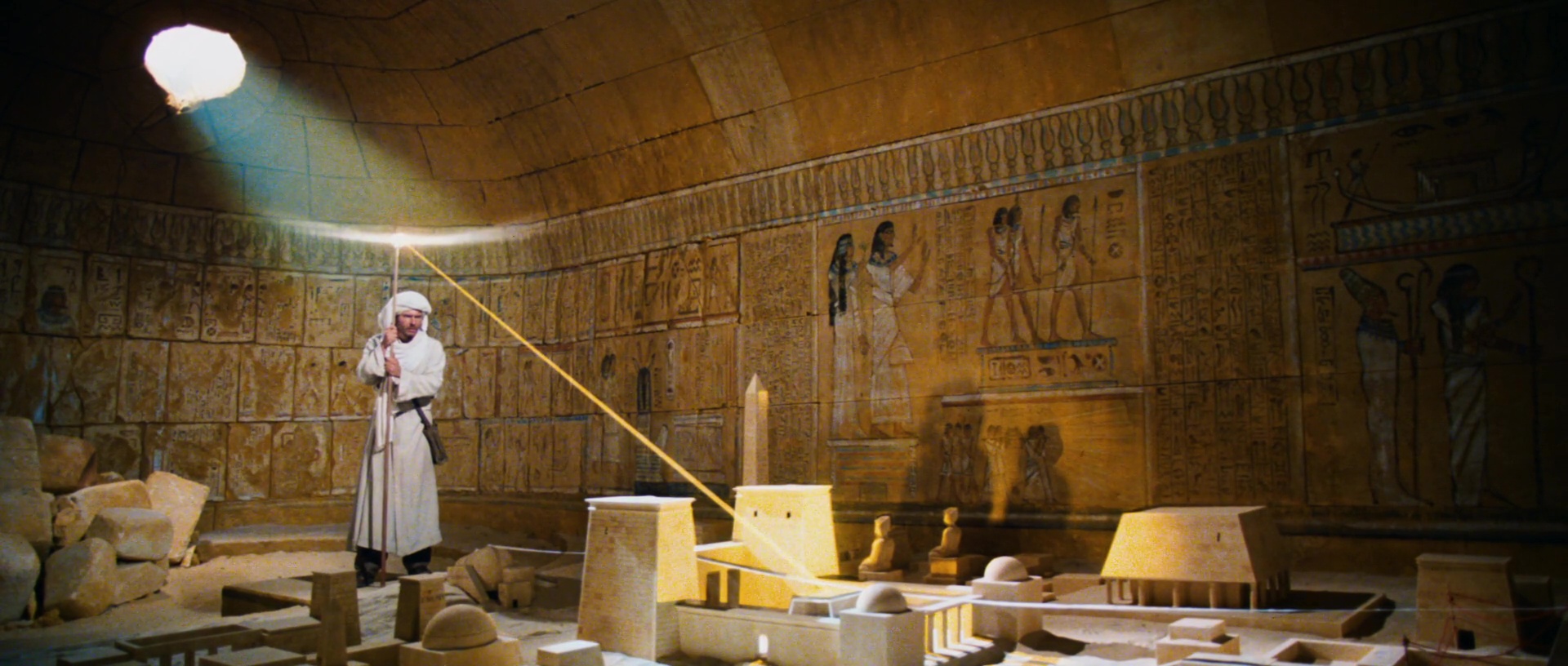
John, most certainly, claimed to speak in God’s name (“The revelation from Jesus Christ, which God gave him”) in Revelation 1:1.  How terribly ironic it would be, if John, who states in Revelation 1:3 that what he writes is “prophecy” and who consigns the “false prophet,” along with the Beast and the Dragon to the lake of fire in Revelation 20:10, were himself a false prophet!  Yarbro Collins reaches a conclusion that is too equivalent to the assertion that John was a false prophet, if and when she and so many other Revelation scholars try to place the writing of Revelation in 96 A.D.  My answer, in the immortal words of Indiana Jones in “Raiders of the Lost Ark” is: “They are digging in the wrong place!” 


Scholars have recognized TWO possible dates for the Book of Revelation:  96 A.D. and 69 A.D.  Scholars who are digging through the historical referents of 96 have come up empty (if Yarbro Collins is correct in her assessment of the historical situation).  Therefore, in a fresh perspective, I recommend digging through the historical referents of 69 A.D.


The issue of whether we date the writing of the book in 69 or 96 also hinges on whether we consider John’s testimony concerning the date of writing to be false or true.  This issue should, therefore, be a no-brainer for Evangelicals.  This issue is phrased by scholars as a conflict between “internal” and “external” evidence for the date of the book.  By “internal,” scholars mean what the author actually claims or appears to claim.  By “external,” scholars mean what others say about the book.  J. Massyngberde Ford (pp. 3-4) asserts that the bulk of internal evidence demands a Jewish milieu, prior to 70 A.D.  Although Adela Yarbro Collins concludes that Revelation was written around 96 A.D., she presents a balanced discussion of the external evidence in dating the book.  Yarbro Collins writes:


The earliest witness is Irenaeus [born c. 130 A.D., died c. 202 A.D.], who says that the Apocalypse was seen at the end of the reign of Domitian.  Since Domitian ruled from 81 to 96, Irenaeus' comment refers to 95 or 96.  . . . [Yet,] Irenaeus is not reliable on figures of the first century . . . .

     Victorinus, who . . . died in 303 . . . and Eusebius [born c. 260 A.D., died c. 339 A.D.] say that Revelation was written during the reign of Domitian.  They add that John was banished to Patmos by Domitian . . . .  [Yet,] [c]ommentators have disagreed about whether this tradition of John's banishment is reliable historical information or a legendary motif inspired by Rev. 1:9 . . . .

     A few late sources date Revelation to the time of Claudius [reigned 41-54 A.D.], Nero [reigned 54-68 A.D.], or Trajan [reigned 98-117 A.D.].  These texts show that there were traditions about the date that were apparently independent of Irenaeus . . . .

     Irenaeus' testimony has been questioned recently on the grounds that he believed both Revelation and the Fourth Gospel to have been written by the apostle John.  If Irenaeus was wrong about authorship, so the argument goes, he may have been wrong about the date too . . . .

     Another objection to Irenaeus' dating could be raised on the basis of Domitian's portrayal as the second persecutor, a new Nero . . . .  There is extremely little evidence that this tradition was accurate.  (pp. 55-56)

In fairness, despite some external evidence that it was written before 70 A.D. (during the reigns of Nero or Claudius), the bulk of the external evidence favors a date of 96 A.D.  The internal evidence supplies another story.  Not only does J. Massyngberde Ford (pp. 3-4) assert that the bulk of internal evidence demands a Jewish milieu, prior to 70 A.D., a number of scholars (Charles, Grant, Caird, Bruce, et. al.) would concur that a date between 68 and 70 A.D. to be a possibility. 


What is it internally that demands the earlier date?  Firstly, the most poignant verses in the book for those looking for internal evidence of the date of Revelation are 17:10-11.  Scholars have agreed that the "seven heads = seven kings" refer to Roman emperors.  Hence, calculations ensue in an effort to determine the emperor's reign under which the book is being written.  John states that "five fell, one is, and the other has not yet come."  That places John and his audience precisely in the reign of emperor number six.

Calculations to determine the date of the book look something like this:  It is difficult to see how the head count could begin before Julius Caesar.  If Julius were head one, head six would be Nero who died in 68 A.D.  Since Julius was never officially an emperor, it seems more likely that Augustus is head one, and that Galba who reigned only in 69 A.D. is head six.  Since Tiberius was the first Emperor following Jesus birth, he might be head one in which case Otho who reigned only in 69 A.D. is head six.  Skip Tiberius as head one and you have Vitellius who reigned only in 69 A.D. as head six.  How many heads may be skipped before this clue of John's becomes meaningless?  It appears that John is claiming that the book is being written around 69 A.D.  There are elaborate (forced?) ways of making Domitian equal head six, but it seems much easier to conclude that 69 A.D. is the date John claimed to write.


Secondly, Revelation 11 discusses the measurement of the temple.  Is it possible to speak of measuring the temple after 70 A.D., the year it was destroyed?  Yarbro Collins (p. 65) states that "before 1882, this passage was used to date the book as a whole before 70 [A.D.]"  She points out, "Recently, J. A. T. Robinson has revived the argument that Revelation as a whole was written before 70" based somewhat upon chapter 11.  Yarbro Collins (p. 67) sees that (at least part of) chapter 11 refers to Jerusalem:  "The earthly Jerusalem is referred to later in ch. 11 as Sodom and Egypt, the place where the lord was crucified (v. 8)."


Thirdly, Yarbro Collins (p. 76) offers one more ambivalent piece of evidence:  "Laodicea suffered a serious earthquake in 60/61 [A.D.]  Nevertheless, it is addressed in Revelation as an affluent church.  The earthquake is not mentioned or alluded to in Revelation.  . . . [Yet, t]he fact that the citizens did not need imperial help to rebuild is an indication that a date in the late 60's is not impossible."

If Yarbro Collins and other scholars are unsuccessfully digging for historical referents in 96 A.D., I repeat the Indiana Jones line: “They are digging in the wrong place.”  They need to be digging in the historical events around 69 A.D. 


Who, then, is John?  He is an infallible witness of a message from God and Jesus.


To the seven churches in the province of Asia:  Martin Kiddle, in The Revelation of St. John, a vol. of The Moffat New Testament Commentary, p. 216, states that "John's picture of the [devil] is as syncretistic as the pagan religions of Asia Minor.  These seven churches have all been planted in the midst of this syncretistic scene.  Most of the churches have good and bad traits. Those bad traits in the churches are primarily related to the sin of syncretism, which John calls porneia/fornication. The sin of Jerusalem—the harlot/Babylon/pornÄ“—is also syncretism.  She (the Jerusalem High Priestly family) committed adultery/porneia with the Roman Empire.  (Syncretism was defined and explained in my post “Apocalyptic?  #7.) The churches are encouraged to repent from their bad traits so they will be prepared for the awe-full events in the coming Divorce of Israel (also, explained in my post “Apocalyptic?  #7).


One can see in the attached map that starting from the Isle of Patmos, the seven churches are in a circular route on the mainland of what is now modern-day Turkey. 


The circular route begins with Ephesus, which (along with Alexandria in Egypt and Antioch in Syria) was one of the three great cities in the eastern portion of the Roman Empire, according to Ford (p. 388).  Significantly, Ephesus was a key church for the Apostle Paul.  He wrote the Epistle to the Ephesians, in which he praises the church for the “love” they show toward all the saints (1:15).  This may be significant since, in the next chapter in Revelation, they are called out for having forsaken their “first love.”  The Gentiles in the church were called “the Uncircumcision” by the Jews who called themselves “the Circumcision” (2:11).  This may indicate, if not outright opposition, at least some antagonism between Jewish and Gentile Christians, but both seem to be present in this church at Paul’s time.  Nevertheless, Paul seems to indicate that Jesus had accomplished a peace between the two factions (?), so that he could reconcile them both in one body to God through the cross, having slain the enmity (2:16).  Perhaps, this peace and reconciliation was the “love” which the church in Revelation had forsaken, or perhaps, it was the “love” that husbands should show their wives, as Christ also “loved” the Church and gave himself up for it” (5:25-33).  If the “fornication” of which Revelation accuses the Nicolaitans in Revelation 2:14 is literal fornication (violating the love between husband and wife), this “forsaken” love could be indicated. The final verse of Ephesians suggests another love to which Revelation could be referring: “Grace be with all them that love our Lord Jesus Christ with a love incorruptible” (6:24 ASV).  That Paul had a loving relationship with the Ephesians is indicated in Acts 20:17-38.  Before Paul returns to Jerusalem in what he believes will be the last trip of his life, he calls for the elders from Ephesus to meet him.  He recounts the prophecies that he has received that he will be carried away into captivity.  At this news, the Ephesian elders “all wept sore, and fell on Paul’s neck and kissed him” (20:38 ASV).  Paul spent altogether about three years at Ephesus and had left Aquila and Priscilla there for a while to help the church (Acts 18:18-21).  These two had further instructed Apollos (Acts 18:26).  Paul endorsed Timothy’s ministry in Ephesus (I Timothy 1:3), thanked Onesiphorus of Ephesus for his help, and commissioned Tychicus to Ephesus (Ephesians 6:21-22, Colossians 4:7, and II Timothy 4:9, 21).  While Paul experienced much love in Ephesus, he tells the Corinthians (I Corinthians 15:32) that he had fought “wild beasts” in the city, but that he was being successful (I Corinthians 16:8-9): “for a great door and effectual is opened unto me, and there are many adversaries.”


While we know a decent amount about the early church at Ephesus, from Paul’s time, the Ephesian church is virtually the only one of the seven churches of Revelation that we know much about (other than the information found in the Book of Revelation). 


Colossians 2:1; 4:13-16 does indicate that the Church in Laodicea exists, and even receives an epistle from Paul, but that epistle has been lost. Since Paul instructed the Colossians and Laodiceans to share the epistles sent to each (Colossians 4:16), the Laodiceans would have, at least, been taught the doctrine found in Colossians.  Paul’s companion Epaphras (Colossians 4:12) may have been the founder of the church.  Paul seems not to have visited the church in person. 

The Book of Acts does not state that a church in Thyatira existed, but an influential woman from Thyatira whose name (or nickname) was Lydia was the first European converted to Christianity by Paul (Acts 16:13-16, 40).  She, however, was living in Philippi at the time of her conversion, not Thyatira.  She houses Paul and his company while they are in Philippi, perhaps, serving also as the host of a house church there.  It is certainly not inconceivable that, given her influence and business connections, she may have converted others upon her return visit(s) to Thyatira, but we do not explicitly know of a church in Thyatira until Revelation mentions it.


After Revelation, the church at Smyrna is referenced in writings as the church at which the Christian martyr Polycarp [born c. 69 A.D., died c. 155 A.D.] is a bishop (or elder) nearly 100 years after Revelation was written.  Polycarp attests that Ignatius of Antioch [a contemporary of Polycarp] wrote letters to the Ephesians, Philadelphians, and Smyrnaeans, but the copies of letters that currently exist are either forgeries or spurious or come from a later period in the history of the Church, when there was a single (monarchical) bishop in each church, when the Roman Catholic church was attempting to establish hierarchy in the Church.  In New Testament times, a plurality of elders and deacons were found in each church, not a single-bishop-per-church model.

Probably, as a result of the dearth of information regarding the seven churches of Revelation, “creative” Christian teachers took it upon themselves to posit a “dispensationalist” interpretation of these seven churches.  See the chart below. 


The dispensationalist interpretation of the seven churches is incorrect.  These seven churches were actual historical churches in what is now modern-day Turkey.  Since we know little about the churches other than Ephesus, however, we will consider what we know about the cities themselves and what is implied or stated concerning the churches in Revelation as we interpret. It is quite likely that many Jewish Christians from Judea traveled to the region of Asia Minor, especially after escaping from Jerusalem before the seven-year war of 66 to 73 A.D. between the Jews and the Romans.  Revelation is concerned more with the problems surrounding Jerusalem at this time than with the religious circumstances of Asia Minor.

BOTTOM LINE:  1.  Whether the author is John the Apostle or John the Prophet, he is still inspired and his writings are infallible.  2.  The seven churches, even though we only know much about the church in Ephesus, are all historical churches existing in 69 A.D.  Dispensationalism should be ruled out.