Showing posts with label Smyrna. Show all posts

Friday, January 8, 2021

Apocalyptic? #16: Are the 2 Good Churches Anti-Semitic? (Rev. 2:8-11 and 3:7-13)


“To the angel of the church in Ephesus . . . Smyrna . . . Pergamum . . . Thyatira . . . Sardis . . . Philadelphia . . . Laodicea write . . .” 

(The full text of the Letters to Smyrna and Philadelphia is printed in the RSV at the conclusion of this blogpost.)


Layer #2 of the Apathy Sandwich:  The GOOD Churches   


Jesus lists no problems with Smyrna and Philadelphia. 
Jesus acknowledges Smyrna’s “poverty,” but, using the trope of irony, he reverses the meaning of the term, claiming that they are actually “rich.”  The trope of irony is also active, referring to certain individuals who “slander” the Christians claiming that they (the slanderers) are “Jews.”  Jesus reverses the meaning of the term “Jews,” claiming that they are actually “a Synagogue of Satan.”  In the ONLY other use of the term “Synagogue of Satan” in the Bible, Jesus tells the church at Philadelphia, “I will make those of the synagogue of Satan who say that they are Jews and are not, but lie—behold, I will make them come and bow down before your feet, and learn that I have loved you.”  Some have claimed that Revelation is anti-Semitic because of such language, but they fail to realize that John is (as is Jesus) a Jew, himself. 

He is not slandering Jews, per se, because that would be self-slander.  I write in my book Revelation:  The Human Drama (pp. 131-132):

     What is the sociopolitical problem which the Apocalypse of John addresses?  Elisabeth Schüssler Fiorenza claims:  "New Testament scholars generally agree that . . . Rev[elation] . . . depict[s] the . . . political struggles of the churches in Asia Minor at the end of the first century." According to this context, the sociopolitical struggle would be between Christianity and the Roman Empire.  Revelation's negative reference to Jews would open John to a charge of Anti-Semitism.  While Fiorenza's claim that "New Testament scholars generally agree" concerning this is true, the general agreement is not necessarily correct.  Fiorenza notes:  "After reviewing scholarly efforts to arrive at a definite interpretation of Rev[elation], [E. Lohmeyer] concludes that the proposed interpretations are so diverse that the true meaning of Rev[elation] still remains hidden."  . . .


     As was Luke T. Johnson, I personally am indebted to [my Jewish major professor at Indiana University] Henry Fischel, who, as he did for Johnson, "introduced me to the Talmud and whose pioneering work on Judaism as part of the Hellenistic world is a model." Hence, I have a sensitivity to the anti-Semitism that has unfortunately been at least a part of the history of Christianity throughout the past two millennia.  Like Johnson, I have no desire to support anti-Semitism in any form.  Johnson's explanation of what has been called "anti-Jewish slander" in the New Testament refers to the rhetorical climate which was a part of the Greco-Roman milieu, in line with the basic methodological tenets which Fischel taught.  Johnson suggests "that the slander of the N[ew] T[estament] is typical of that found among Jews as among other Hellenists." According to Johnson, the problem with many approaches to the "anti-Jewish" issue is that "they isolate 'Christianity' over against 'Judaism' as though each was [sic] a well-defined entity when the polemic was written." Johnson argues that Christianity was merely one of a number of rival Jewish groups:  "So-called normative Judaism was not normative in the period of the N[ew] T[estament].  The question Who is a real Jew? was then an open question, debated fiercely and even violently by rival claimants."

     Apparently, this intra-Jewish rivalry is operative in Revelation, as well.  R. H. Charles argues and most subsequent scholars agree that the author of Revelation is Jewish.  The author holds great respect for the twelve tribes of Israel.  He applies the terms Mt. Zion and Jerusalem to his heroes with a healthy respect for such terms.  His 144,000 are identified not as gentiles, but as being from the twelve tribes of Israel (minus Dan).  If anything, he is jealous of the Jewish terminology, and unwilling to apply what he considers to be prestigious nomenclature to those whom he considers unworthy to be called "Jews."  Yet, it seems clear that at least some of John's villains are Jews. 


Nevertheless, using the trope of irony, those who say that they are Jews are recast as non-Jews (i.e., the synagogue of Satan).  This was an intra-Jewish rivalry move.  The non-Christian Jews were actually slandering the Christian Jews.  Often, as will be explained in the next post, this slander resulted in the Christian Jews being “black-balled” from the economic system of Asia Minor.  Hence, Jesus can say to the Christian Jews:
“I know your tribulation and your poverty (but you are rich) and the slander of those who say that they are Jews and are not, but are a synagogue of Satan.” To get an idea how this anti-Christian economic pressure might work, consider this scenario:  How many Christians in America, in 2021, fear that they would suffer financially were they to make certain “Christian” comments regarding issues of killing innocents or the elderly or certain forms of sexual immorality?  The suggestion, in Revelation, that those who claim to be Jews are not Jews is fairly similar, rhetorically, to presidential candidate Joe Biden, in 2020, saying to blacks in America: “If you have a problem figuring out whether you're for me or Trump, then you ain’t black!”  I write further in Revelation:  The Human Drama (pp. 164-165):


     What is strange in Revelation is that John is not willing to call ANYONE a Jew.  The fact that the word Jew is in his vocabulary is evident by two citations (2:9 & 3:9), but it occurs nowhere else in Revelation.  The word Israel occurs in three locations.  In 2:14, Balaam caused the Israelites to sin, but these Israelites were from past ages.  In 7:4, the 144,000 saved from the earth are clearly Christians, but are identified as the tribes of Israel.  In 21:12, the gates of the city (New) Jerusalem are inscribed with the names of the twelve tribes of Israel.  John uses the term "Jerusalem" three times (3:12, 21:2,10), but all three instances refer to the "New Jerusalem," not the old Jerusalem.  "Mount Zion" occurs once (14:1), but it refers once again to the 144,000.  If, as Ford [also] understands, the harlot Babylon is faithless Jerusalem, John is continuing his rejection of the villains' nomenclature.  Thus, he renames "the holy city" (11:2) in which the "Lord was crucified" (11:8), "Sodom and Egypt."  If he refers to Jews who dwell in Judea, he calls them the "inhabitants of the land" and leaves off the words "of Israel."

     At least some of John's villains are Jews by the weight of the language used in 2:9 and 3:9. In terms of scholarly support for this conclusion, Fiorenza . . . concludes:  "Therefore, the so-called Jews . . . do not seem to represent a Christian group, but the Jewish citizenship of these cities."  Kiddle also understands the villains in Smyrna and Philadelphia to be literal Jews.  Caird concurs, as does Charles. (164-165)


In his message to the church in Philadelphia, “the hour of trial” that is coming upon “the inhabitants of the earth/land” (actually, meaning Judea, throughout the seven-year war between the Jews and the Romans from 66-73 A.D.), the NIV translation incorrectly translates what should be translated as “the inhabitants of the land” as “those who dwell upon the earth.”  “The inhabitants of the land/earth” is the exact terminology used to refer to the (non-Jewish) inhabitants of the (Promised) Land (before Israel dominated it) throughout the Pentateuch, Joshua, Judges, I and II Samuel, and I and II Chronicles, and even later.  Genesis 34:30, 50:11, Exodus 23:31, 34:12 & 15, Leviticus 18:25, 25:10, Numbers 13:32, 14:14, 32:17, 33:52 & 55, Joshua 2:9, 7:9: 9:24, Judges 1:32 & 33, 2:2, I Samuel 27:8, II Samuel 5:6, I Chronicles 11:4, 22:18, and II Chronicles 20:7 all use the expression “the inhabitants of the land” when referring to the non-Jewish population of the (Promised) Land.  The word translated “land” in every one of these instances is the word ארץ/ARETZ, in the Hebrew, the equivalent of γῆ/GE in the Greek, which virtually all Bible versions incorrectly translate as “Earth,” in Revelation.  A tremendous amount of confusion regarding what Revelation is predicting is removed once one realizes that the prophecies directed against the so-called “earth” (and the “inhabitants of the earth” and the “kings of the earth”) in Revelation are actually only directed against the “land” (of Israel).

I surmise that one of the principal errors of those in Smyrna and Philadelphia who say that they are Jews but are actually a synagogue of Satan is that they were guilty of the same PORNEIA that the three churches in the middle of the Apathy-Porneia sandwich were guilty of.  That subject will be discussed in the next post.

The Message to Smyrna

8 “And to the angel of the church in Smyrna write: ‘The words of the first and the last, who died and came to life.

9 “‘I know your tribulation and your poverty (but you are rich) and the slander of those who say that they are Jews and are not, but are a synagogue of Satan. 10 Do not fear what you are about to suffer. Behold, the devil is about to throw some of you into prison, that you may be tested, and for ten days you will have tribulation. Be faithful unto death, and I will give you the crown of life. 11 He who has an ear, let him hear what the Spirit says to the churches. He who conquers shall not be hurt by the second death.’

The Message to Philadelphia

7 “And to the angel of the church in Philadelphia write: ‘The words of the holy one, the true one, who has the key of David, who opens and no one shall shut, who shuts and no one opens.

8 “‘I know your works. Behold, I have set before you an open door, which no one is able to shut; I know that you have but little power, and yet you have kept my word and have not denied my name. 9 Behold, I will make those of the synagogue of Satan who say that they are Jews and are not, but lie—behold, I will make them come and bow down before your feet, and learn that I have loved you. 10 Because you have kept my word of patient endurance, I will keep you from the hour of trial which is coming on the whole world, to try those who dwell upon the earth. 11 I am coming soon; hold fast what you have, so that no one may seize your crown. 12 He who conquers, I will make him a pillar in the temple of my God; never shall he go out of it, and I will write on him the name of my God, and the name of the city of my God, the new Jerusalem which comes down from my God out of heaven, and my own new name. 13 He who has an ear, let him hear what the Spirit says to the churches.’

Saturday, September 19, 2020

Apocalyptic? #10: They're Digging in the Wrong Place (Rev. 1:4a)


4 John,

To the seven churches in the province of Asia


(Revelation 1:4a NIV)


Inside Address and Return Address


4 John  No doubt, this book is written by John—but which John?  Not the same John as the one who wrote the Gospel or the same person as the one who wrote I John, II John, or III John.  This John writes in Greek, but thinks in Hebrew.  Not so for the writer of the fourth Gospel, who writes in very clear Greek, or any of the three letters attributed to John.  The author, a Jewish Christian prophet known only by the name John, was adept at the use of figurative language.  Some Revelation scholars (primarily, source-theorists) believe that the book was written by several different authors.  The frustration associated with reading source-theorists (those who believe the book is compiled by various authors using various sources at various times) is the scholarly consensus that Revelation's unique grammar argues convincingly that it was written by a single author at a particular time.  While earlier fragmentation-based theories (or source-theories) of authorship have survived, the majority view now holds that the work is a unity by one author.  Evangelicals should happily accept this scholarly conclusion:  John is the only author of Revelation.  In I John 1:1-4, the (unnamed) author claims multiple times to have seen, heard, and touched Jesus.  These are apostolic credentials, even though no apostleship is specifically claimed by the author.  The Gospel of John identifies its author as “the disciple whom Jesus loved”: 

“20 Peter turned and saw the disciple whom Jesus loved following them . . . 24 This is the disciple who is bearing witness about these things, and who has written these things, and we know that his testimony is true” (John 20:20-24 ESV).


The evidence that this disciple whom Jesus loved is the Apostle John is found in John 13:23, 19:26, 20:2, and 21:7, in addition to 20:20.  The author of II John and III John identifies himself only as “The Elder.”  Only in Revelation, of these all so-called “Johannine” writings, does the author identify himself as “John.”  The reader of this blog is certainly free to disagree with me with regard to the authorship of Revelation (it really doesn’t change any part of the perspective I am offering), but I believe that the Gospel of John and I John were written by the Apostle John.  I believe that II John and III John were written by someone (possibly, but not necessarily, named “John”) who was a disciple of the Apostle John and who received a spiritual gift of “eldership” through the laying on of the Apostle John’s hands.  (Note that, according to II Timothy 1:6 and I Timothy 4:14, Timothy received a miraculous spiritual gift of “eldership” by the laying on of the Apostle Paul’s hands.  See my blogpost “The Logic of Christianity 17:  And Batting Cleanup:  The Holy Spirit.”)  John the author of Revelation claims to have the spiritual gift of “prophecy” (which he surely received by the laying on of hands of an apostle [see Acts 8:18], possibly the Apostle John).  All books in the New Testament not written by Apostles were written by individuals with such miraculous spiritual gifts:  evangelists, prophets, elders, etc.  These gifts were administered by the laying on of the hands of apostles; therefore, all of the New Testament books may be called the Apostles’ Doctrine (Acts 2:42).  This is what certifies the infallibility of all New Testament books.  Henry Chadwick, in The Early Church, writes: “Sixty or seventy years later, Ignatius was speaking of Antioch and the Asian churches as possessing a monarchical bishop, together with presbyters and deacons.  In his time, there were neither apostles nor prophets” (p. 46).  Whether the John of Revelation is John the Prophet, John the Elder, or John the Apostle, his testimony is inspired of God (and, therefore, Apostle’s Doctrine) and should be considered infallible by believers.  As a believer, therefore, I reject Adela Yarbro Collins’s assertion that the crisis addressed in Revelation is more perceived than real, i.e., that the writer of Revelation was mistaken in his prophecy.  Prophets who were mistaken in their prophecy were condemned in Ezekiel 13.  Such false prophets were condemned to death by God in Deuteronomy 18:20-22:


20 But a prophet who presumes to speak in my name anything I have not commanded, or a prophet who speaks in the name of other gods, is to be put to death.”

21 You may say to yourselves, “How can we know when a message has not been spoken by the Lord?” 22 If what a prophet proclaims in the name of the Lord does not take place or come true, that is a message the Lord has not spoken.

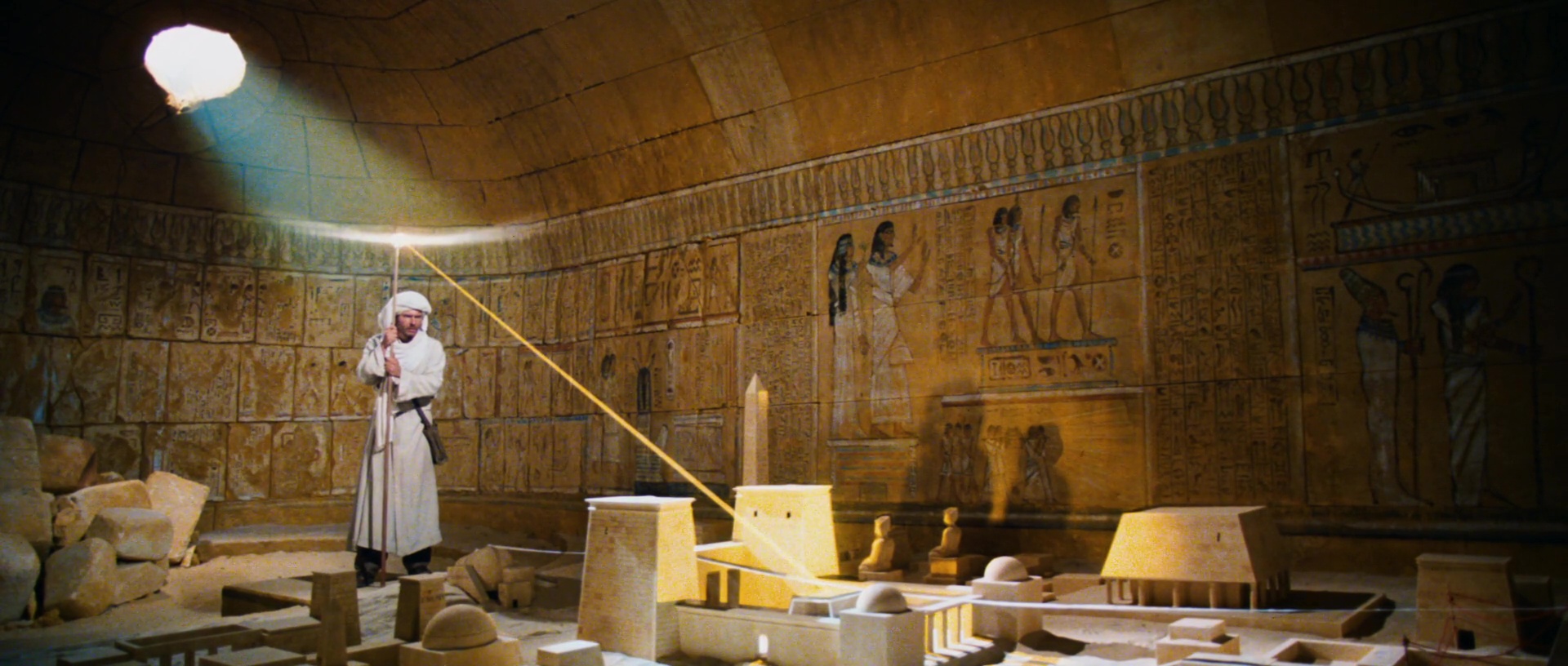
John, most certainly, claimed to speak in God’s name (“The revelation from Jesus Christ, which God gave him”) in Revelation 1:1.  How terribly ironic it would be, if John, who states in Revelation 1:3 that what he writes is “prophecy” and who consigns the “false prophet,” along with the Beast and the Dragon to the lake of fire in Revelation 20:10, were himself a false prophet!  Yarbro Collins reaches a conclusion that is too equivalent to the assertion that John was a false prophet, if and when she and so many other Revelation scholars try to place the writing of Revelation in 96 A.D.  My answer, in the immortal words of Indiana Jones in “Raiders of the Lost Ark” is: “They are digging in the wrong place!” 


Scholars have recognized TWO possible dates for the Book of Revelation:  96 A.D. and 69 A.D.  Scholars who are digging through the historical referents of 96 have come up empty (if Yarbro Collins is correct in her assessment of the historical situation).  Therefore, in a fresh perspective, I recommend digging through the historical referents of 69 A.D.


The issue of whether we date the writing of the book in 69 or 96 also hinges on whether we consider John’s testimony concerning the date of writing to be false or true.  This issue should, therefore, be a no-brainer for Evangelicals.  This issue is phrased by scholars as a conflict between “internal” and “external” evidence for the date of the book.  By “internal,” scholars mean what the author actually claims or appears to claim.  By “external,” scholars mean what others say about the book.  J. Massyngberde Ford (pp. 3-4) asserts that the bulk of internal evidence demands a Jewish milieu, prior to 70 A.D.  Although Adela Yarbro Collins concludes that Revelation was written around 96 A.D., she presents a balanced discussion of the external evidence in dating the book.  Yarbro Collins writes:


The earliest witness is Irenaeus [born c. 130 A.D., died c. 202 A.D.], who says that the Apocalypse was seen at the end of the reign of Domitian.  Since Domitian ruled from 81 to 96, Irenaeus' comment refers to 95 or 96.  . . . [Yet,] Irenaeus is not reliable on figures of the first century . . . .

     Victorinus, who . . . died in 303 . . . and Eusebius [born c. 260 A.D., died c. 339 A.D.] say that Revelation was written during the reign of Domitian.  They add that John was banished to Patmos by Domitian . . . .  [Yet,] [c]ommentators have disagreed about whether this tradition of John's banishment is reliable historical information or a legendary motif inspired by Rev. 1:9 . . . .

     A few late sources date Revelation to the time of Claudius [reigned 41-54 A.D.], Nero [reigned 54-68 A.D.], or Trajan [reigned 98-117 A.D.].  These texts show that there were traditions about the date that were apparently independent of Irenaeus . . . .

     Irenaeus' testimony has been questioned recently on the grounds that he believed both Revelation and the Fourth Gospel to have been written by the apostle John.  If Irenaeus was wrong about authorship, so the argument goes, he may have been wrong about the date too . . . .

     Another objection to Irenaeus' dating could be raised on the basis of Domitian's portrayal as the second persecutor, a new Nero . . . .  There is extremely little evidence that this tradition was accurate.  (pp. 55-56)

In fairness, despite some external evidence that it was written before 70 A.D. (during the reigns of Nero or Claudius), the bulk of the external evidence favors a date of 96 A.D.  The internal evidence supplies another story.  Not only does J. Massyngberde Ford (pp. 3-4) assert that the bulk of internal evidence demands a Jewish milieu, prior to 70 A.D., a number of scholars (Charles, Grant, Caird, Bruce, et. al.) would concur that a date between 68 and 70 A.D. to be a possibility. 


What is it internally that demands the earlier date?  Firstly, the most poignant verses in the book for those looking for internal evidence of the date of Revelation are 17:10-11.  Scholars have agreed that the "seven heads = seven kings" refer to Roman emperors.  Hence, calculations ensue in an effort to determine the emperor's reign under which the book is being written.  John states that "five fell, one is, and the other has not yet come."  That places John and his audience precisely in the reign of emperor number six.

Calculations to determine the date of the book look something like this:  It is difficult to see how the head count could begin before Julius Caesar.  If Julius were head one, head six would be Nero who died in 68 A.D.  Since Julius was never officially an emperor, it seems more likely that Augustus is head one, and that Galba who reigned only in 69 A.D. is head six.  Since Tiberius was the first Emperor following Jesus birth, he might be head one in which case Otho who reigned only in 69 A.D. is head six.  Skip Tiberius as head one and you have Vitellius who reigned only in 69 A.D. as head six.  How many heads may be skipped before this clue of John's becomes meaningless?  It appears that John is claiming that the book is being written around 69 A.D.  There are elaborate (forced?) ways of making Domitian equal head six, but it seems much easier to conclude that 69 A.D. is the date John claimed to write.


Secondly, Revelation 11 discusses the measurement of the temple.  Is it possible to speak of measuring the temple after 70 A.D., the year it was destroyed?  Yarbro Collins (p. 65) states that "before 1882, this passage was used to date the book as a whole before 70 [A.D.]"  She points out, "Recently, J. A. T. Robinson has revived the argument that Revelation as a whole was written before 70" based somewhat upon chapter 11.  Yarbro Collins (p. 67) sees that (at least part of) chapter 11 refers to Jerusalem:  "The earthly Jerusalem is referred to later in ch. 11 as Sodom and Egypt, the place where the lord was crucified (v. 8)."


Thirdly, Yarbro Collins (p. 76) offers one more ambivalent piece of evidence:  "Laodicea suffered a serious earthquake in 60/61 [A.D.]  Nevertheless, it is addressed in Revelation as an affluent church.  The earthquake is not mentioned or alluded to in Revelation.  . . . [Yet, t]he fact that the citizens did not need imperial help to rebuild is an indication that a date in the late 60's is not impossible."

If Yarbro Collins and other scholars are unsuccessfully digging for historical referents in 96 A.D., I repeat the Indiana Jones line: “They are digging in the wrong place.”  They need to be digging in the historical events around 69 A.D. 


Who, then, is John?  He is an infallible witness of a message from God and Jesus.


To the seven churches in the province of Asia:  Martin Kiddle, in The Revelation of St. John, a vol. of The Moffat New Testament Commentary, p. 216, states that "John's picture of the [devil] is as syncretistic as the pagan religions of Asia Minor.  These seven churches have all been planted in the midst of this syncretistic scene.  Most of the churches have good and bad traits. Those bad traits in the churches are primarily related to the sin of syncretism, which John calls porneia/fornication. The sin of Jerusalem—the harlot/Babylon/pornē—is also syncretism.  She (the Jerusalem High Priestly family) committed adultery/porneia with the Roman Empire.  (Syncretism was defined and explained in my post “Apocalyptic?  #7.) The churches are encouraged to repent from their bad traits so they will be prepared for the awe-full events in the coming Divorce of Israel (also, explained in my post “Apocalyptic?  #7).


One can see in the attached map that starting from the Isle of Patmos, the seven churches are in a circular route on the mainland of what is now modern-day Turkey. 


The circular route begins with Ephesus, which (along with Alexandria in Egypt and Antioch in Syria) was one of the three great cities in the eastern portion of the Roman Empire, according to Ford (p. 388).  Significantly, Ephesus was a key church for the Apostle Paul.  He wrote the Epistle to the Ephesians, in which he praises the church for the “love” they show toward all the saints (1:15).  This may be significant since, in the next chapter in Revelation, they are called out for having forsaken their “first love.”  The Gentiles in the church were called “the Uncircumcision” by the Jews who called themselves “the Circumcision” (2:11).  This may indicate, if not outright opposition, at least some antagonism between Jewish and Gentile Christians, but both seem to be present in this church at Paul’s time.  Nevertheless, Paul seems to indicate that Jesus had accomplished a peace between the two factions (?), so that he could reconcile them both in one body to God through the cross, having slain the enmity (2:16).  Perhaps, this peace and reconciliation was the “love” which the church in Revelation had forsaken, or perhaps, it was the “love” that husbands should show their wives, as Christ also “loved” the Church and gave himself up for it” (5:25-33).  If the “fornication” of which Revelation accuses the Nicolaitans in Revelation 2:14 is literal fornication (violating the love between husband and wife), this “forsaken” love could be indicated. The final verse of Ephesians suggests another love to which Revelation could be referring: “Grace be with all them that love our Lord Jesus Christ with a love incorruptible” (6:24 ASV).  That Paul had a loving relationship with the Ephesians is indicated in Acts 20:17-38.  Before Paul returns to Jerusalem in what he believes will be the last trip of his life, he calls for the elders from Ephesus to meet him.  He recounts the prophecies that he has received that he will be carried away into captivity.  At this news, the Ephesian elders “all wept sore, and fell on Paul’s neck and kissed him” (20:38 ASV).  Paul spent altogether about three years at Ephesus and had left Aquila and Priscilla there for a while to help the church (Acts 18:18-21).  These two had further instructed Apollos (Acts 18:26).  Paul endorsed Timothy’s ministry in Ephesus (I Timothy 1:3), thanked Onesiphorus of Ephesus for his help, and commissioned Tychicus to Ephesus (Ephesians 6:21-22, Colossians 4:7, and II Timothy 4:9, 21).  While Paul experienced much love in Ephesus, he tells the Corinthians (I Corinthians 15:32) that he had fought “wild beasts” in the city, but that he was being successful (I Corinthians 16:8-9): “for a great door and effectual is opened unto me, and there are many adversaries.”


While we know a decent amount about the early church at Ephesus, from Paul’s time, the Ephesian church is virtually the only one of the seven churches of Revelation that we know much about (other than the information found in the Book of Revelation). 


Colossians 2:1; 4:13-16 does indicate that the Church in Laodicea exists, and even receives an epistle from Paul, but that epistle has been lost. Since Paul instructed the Colossians and Laodiceans to share the epistles sent to each (Colossians 4:16), the Laodiceans would have, at least, been taught the doctrine found in Colossians.  Paul’s companion Epaphras (Colossians 4:12) may have been the founder of the church.  Paul seems not to have visited the church in person. 

The Book of Acts does not state that a church in Thyatira existed, but an influential woman from Thyatira whose name (or nickname) was Lydia was the first European converted to Christianity by Paul (Acts 16:13-16, 40).  She, however, was living in Philippi at the time of her conversion, not Thyatira.  She houses Paul and his company while they are in Philippi, perhaps, serving also as the host of a house church there.  It is certainly not inconceivable that, given her influence and business connections, she may have converted others upon her return visit(s) to Thyatira, but we do not explicitly know of a church in Thyatira until Revelation mentions it.


After Revelation, the church at Smyrna is referenced in writings as the church at which the Christian martyr Polycarp [born c. 69 A.D., died c. 155 A.D.] is a bishop (or elder) nearly 100 years after Revelation was written.  Polycarp attests that Ignatius of Antioch [a contemporary of Polycarp] wrote letters to the Ephesians, Philadelphians, and Smyrnaeans, but the copies of letters that currently exist are either forgeries or spurious or come from a later period in the history of the Church, when there was a single (monarchical) bishop in each church, when the Roman Catholic church was attempting to establish hierarchy in the Church.  In New Testament times, a plurality of elders and deacons were found in each church, not a single-bishop-per-church model.

Probably, as a result of the dearth of information regarding the seven churches of Revelation, “creative” Christian teachers took it upon themselves to posit a “dispensationalist” interpretation of these seven churches.  See the chart below. 


The dispensationalist interpretation of the seven churches is incorrect.  These seven churches were actual historical churches in what is now modern-day Turkey.  Since we know little about the churches other than Ephesus, however, we will consider what we know about the cities themselves and what is implied or stated concerning the churches in Revelation as we interpret. It is quite likely that many Jewish Christians from Judea traveled to the region of Asia Minor, especially after escaping from Jerusalem before the seven-year war of 66 to 73 A.D. between the Jews and the Romans.  Revelation is concerned more with the problems surrounding Jerusalem at this time than with the religious circumstances of Asia Minor.

BOTTOM LINE:  1.  Whether the author is John the Apostle or John the Prophet, he is still inspired and his writings are infallible.  2.  The seven churches, even though we only know much about the church in Ephesus, are all historical churches existing in 69 A.D.  Dispensationalism should be ruled out.