Saturday, October 24, 2020

Apocalyptic? #12: Coming with the Clouds (Rev. 1:5b-8)


To him who loves us and has freed us from our sins by his blood, and has made us to be a kingdom and priests to serve his God and Father—to him be glory and power for ever and ever! Amen.

“Look, he is coming with the clouds,”
    and “every eye will see him,
even those who pierced him”;
    and all peoples on earth “will mourn because of him.”
So shall it be! Amen.

“I am the Alpha and the Omega,” says the Lord God, “who is, and who was, and who is to come, the Almighty.”


(Revelation 1:4-8 NIV)


To him who loves us and has freed us from our sins by his blood,
 and has made us to be a kingdom and priests to serve his God and Father—to him be glory and power for ever and ever! Amen.  In this popular benediction/doxology, quoted in the church down through the ages, John praises Jesus for so loving us that he paid for our sins by his death (John 3:16), and making us into a Kingdom of priests.  Martin Luther saw in this verse a very important doctrine: “The priesthood of all believers.”  We do not need to have priests (beyond our great high priest, Jesus) to approach God for us.  WE are ALL priests!  The clergy-laity distinction is unnecessary, if not completely wrong!  We will serve Jesus’ God and Father.   Notice that God is not only Jesus’ Father; John calls him Jesus’ God, as well.  The benediction/doxology ends with words familiar to all who pray the Lord’s Prayer: “To Him be glory and power for ever and ever!  Amen.”  The Lord’s Prayer ends: “For Yours is the kingdom and the power and the glory forever!  Amen.”  Who is the “Him” who has glory and power forever?  The antecedent of the pronoun “him” could be either Jesus (To him who loves us) or his God and Father (which is the closer antecedent).

“Look, he is coming with the clouds,”
    and “every eye will see him,
even those who pierced him”;
    and all peoples on earth “will mourn because of him.”
So shall it be! Amen.


The Clouds of Heaven

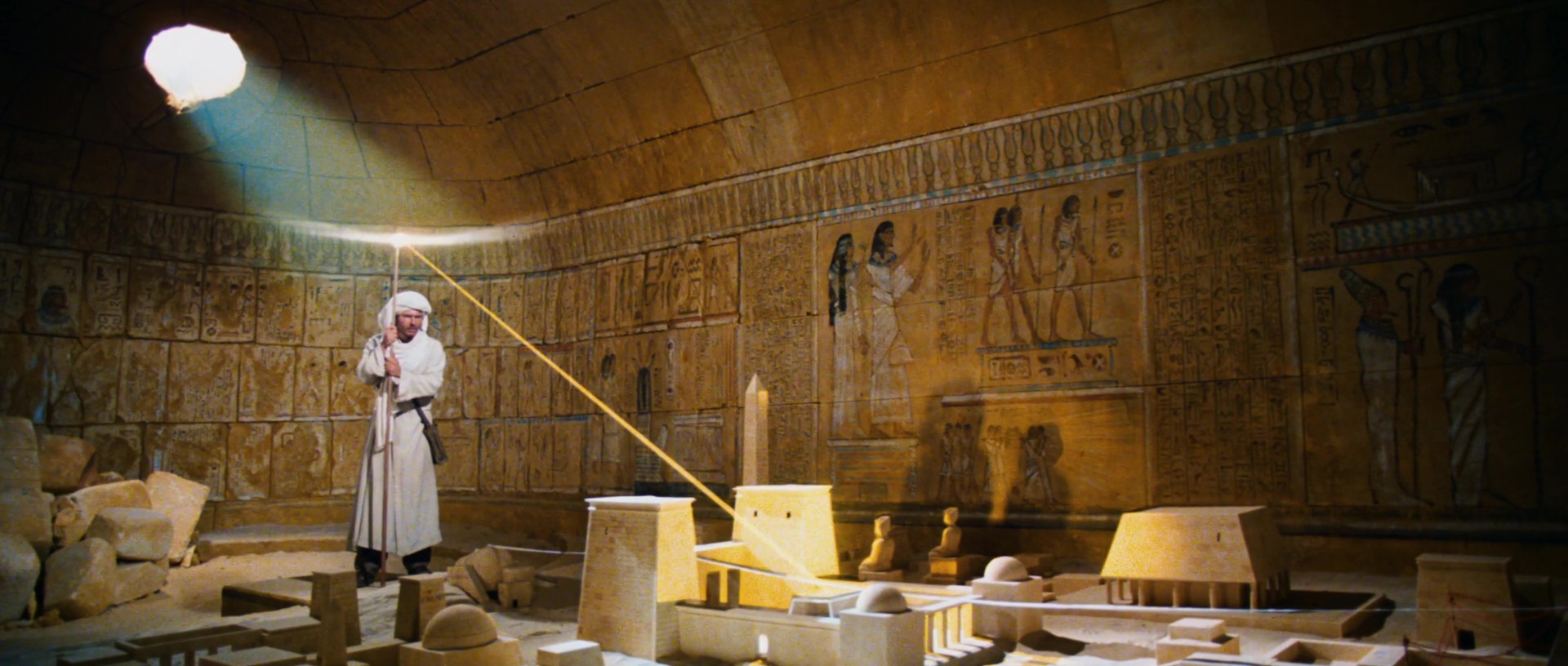
Daniel 7:13 states: “I saw One like a Son of Man coming with the clouds of heaven. He approached the Ancient of Days and was led into His presence.”  In Matthew 24:30, Jesus identifies himself as the Son of Man from Daniel and states: “At that time the sign of the Son of Man will appear in heaven, and all the tribes of the earth will mourn. They will see the Son of Man coming on the clouds of heaven, with power and great glory.”  Mark 13:26 and Luke 21:27 agree, but shorten the prophecy to the words, “At that time they will see the Son of Man coming in the clouds with great power and glory.”  Since Matthew 24, Mark 13, and Luke 21 all pertain to Jesus’ mini-apocalypse and connect his “coming” with his prophecy of the Fall of Jerusalem, John is here effectively informing us that he is connecting the prophecies of Revelation to that same time frame, i.e., around 70 A.D.  Writing a year before the Fall of Jerusalem in 70, John is informing the churches in Asia Minor, which probably contained many who had fled Jerusalem and Judea because of Jesus’ prophecy and their perception of a gathering storm around Jerusalem, that he is writing concerning the apocalyptic events surrounding the Judean-Roman War that had begun a year earlier.  This further corroborates the dating of 69 A.D. that I presented in my earlier post (Apocalyptic? #10) that other scholars are unsuccessfully digging for historical referents in 96 A.D., I repeat the Indiana Jones line: “They are digging in the wrong place.”  They need to be digging in the historical events around 69 A.D. 


Every Eye Will See Him,
Even Those Who Pierced Him

Having said that, I am immediately confronted with the question of what will be the visible nature of Jesus’ “coming.”  What does he mean that EVERY EYE will see him?  The Billy Graham Evangelistic Association suggests a possibility:  

First, He will come for believers, both living and dead, in the “rapture” (read 1 Thessalonians 4:13-17). In this view, the rapture—which is the transformation and catching up of all Christians, dead or alive, to meet Christ in the air—will be secret, for it will be unknown to the world of unbelievers at the time of its happening.

The I Thessalonians passage (4:17) refers to the meeting in the clouds,” but the BillyGraham.com quotation says that that that meeting might be secret.”  Are the believers (both living and dead) the only ones who are indicated when John says that “every eye” will see him?  The Christians, you will note, are not the ones “who pierced him.”  Daniel only claimed that HE (in a vision) “saw One like a Son of Man coming with the clouds of heaven.”  Zechariah 12:10 states that God “will pour out on the house of David and on the residents of Jerusalem a spirit of grace and prayer, and THEY will look on . . . the One they have pierced. They will mourn for Him.” 

και

So, was John saying that Jesus’ coming would be a visible event, clearly seen by everyone alive on Earth at the time and by everyone who has died in the history of mankind?  Or, was he saying, as BillyGraham.com suggests that the event will be secret?  A lot hinges on one little Greek word—KAI—that is normally translated “and,” but is translated “even” in the translation we have used: “EVEN those who pierced him.”  What would it mean, if it were translated “and”?  Wouldn’t it be redundant to say that “every eye” AND the eyes of those who pierced him would see him?  That’s probably why our translator chose another alternative: “even.”  Nevertheless, “even” is only one of several alternative translations of the word KAI.  Another major alternative translation is “namely” or “that is.”  If the “every eye” that will see him means “namely” those who pierced him, we do not have a universally visible event.  We have something closer to the suggestion of BillyGraham.com:  that it will “be secret.”  Matthew 26:64 has Jesus telling, specifically, the Sanhedrin that tried him: “But I say to all of you: From now on you will see the Son of Man sitting at the right hand of the Mighty One and coming on the clouds of heaven.  The vast majority of those who pierced him in 30 or 33 A.D. (being of adult age in that year) would now likely be dead (in 69 A.D.), so God may be saying that they (from their residence in Hades) will see the “Son of Man coming with the clouds of heaven . . . approach[ing] the Ancient of Days and [being] led into His presence.”  This would fit clearly with Zechariah 12:10, that God “will pour out on the house of David and on the residents of Jerusalem a spirit of grace and prayer, and THEY will look on . . . the One they have pierced. They will mourn for Him.”  John confirms: “all peoples on earth “will mourn because of him.” Keep in mind:  the word “earth” means “land (of Israel).”  Matthew 24:30 confirms: “At that time the sign of the Son of Man will appear in heaven, and all the tribes of the earth will mourn. They will see the Son of Man coming on the clouds of heaven, with power and great glory.”  The “tribes” are the twelve tribes; the “earth” is the “land” of Israel.  The Christians would NEVER “mourn” when they see Jesus being led into God’s presence.  In terms of mourning, Luke 23:28 reports Jesus’ words: “Daughters of Jerusalem, do not weep for Me, but weep for yourselves and for your children.”


Furthermore, vast numbers of the residents of Jerusalem in 69 A.D. (especially, those old enough to have taken part in or to have accepted the “piercing” of Jesus) were savagely slain in the siege of Jerusalem.  Some of the younger residents were kept alive to provide sport for the wild beasts in the Roman amphitheaters, but the older residents were killed.  In fact, this event (the coming in the clouds) may not have been witnessed by ANYONE ALIVE—except for the Christians who were being raptured (in the Parousia).  The visible nature of Jesus’ “coming” is described elsewhere in the New Testament as happening “in the twinkling of an eye” (I Corinthians 15:52) and as happening as rapidly “as the lightning flashes from the east, and is seen even to the west” (Matthew 24:27).  While “every eye” might “see” the lightning flash, the significance of what had happened would have occurred in such rapid-fire sequence that, effectively, it would have been “secret.”  Matthew 24:41 describes the event narratively: “Two women shall be grinding at the mill; the one shall be taken, and the other left.  Luke 17:35 reports the same phenomenon.  Not only does that sound like a rapid-fire event, but also it would seem to place the general time frame of the Parousia as occurring at a time when “women [would] be grinding at the mill.”  For those who contend that the Parousia has not yet come, modern technology seems to have ended the period when women grinded at the mill.


How could the Parousia have happened “in secret” in the years from 70 to 73 A.D.?  How could no one have known about this event?  So many Jews (including Jewish Christians?) were either slain or escaped into hiding at that time that no one would know if they had been raptured, killed, or just gone into hiding.  I cited Church historian S. G. F. Brandon in the previous post: “[F]ar more amazing is the fact that . . . Christian Literature contains no record of the fate of its Mother Church in this calamity.”  What happened to them? 


When did Jesus say that the Parousia would occur?  Matthew 16:28 says: “Truly I tell you, some who are standing here will not taste death until they see the Son of Man coming in His kingdom.”  Mark 9:1 and Luke 9:27 repeat Jesus’ prophecy.  Put otherwise, a generation for the Jews is 40 years (based on the generation of wondering in the wilderness after the Exodus).  Jesus is cited in Matthew 24:32: “Verily I say unto you, this generation shall not pass, till all these things be fulfilled.  Mark 13:30 and Luke 21:32 repeat Jesus’ prophecy.  And, now, in 69 A.D., Revelation 1:1 (NIV) indicates that John is showing God’s “servants what must SOON take place.”  John is to be listened to by his audience, according to Revelation 1:3 (NIV): “because the time is NEAR.”  John predicts that the "time" is "near" also in Revelation 22:10, that Jesus is "coming soon" (Revelation 3:11, 22:20), that the dragon’s "time is short" (Revelation 12:12), and that these things “must soon take place" (Revelation 22:6).


Compare John’s discussion of “soon” with Daniel’s discussion of Nebuchadnezzar’s apocalyptic dream in Daniel 2:28: “There is a God in heaven who reveals mysteries. He has shown King Nebuchadnezzar what will necessarily happen in the last days . . . As Your Majesty was lying there, your mind turned to things to come, and the revealer of mysteries showed you what is going to happen. As for me, this mystery has been revealed to me,The Hebrew word for “reveals, revealer, and revealed” may be translated with forms of the term “apocalypse” in the Greek, which I think John does in Revelation 1:1.  Daniel then proceeds to predict the coming of four great empires,beginning with Nebuchadnezzar’s own Babylonian empire, and proceeding through the Persian, Greek, and Roman Empires, concluding with a messianic prophecy of one whose kingdom will never be destroyed (understand:  Jesus).  John borrows Daniel’s language of “show[ing] King Nebuchadnezzar what will necessarily happen in the last days” and changes the wording from showing “King Nebuchadnezzar” to showing “His servants what will necessarily happen SOON.”  John substitutes the word “soon” where Daniel had written “the last days.”  John has, therefore, stated that the prophecy of Daniel concerning the “kingdom will never be destroyed” is about to be fulfilled.  Soon!  Not in some far-off “last days.” 

“I am the Alpha and the Omega,” says the Lord God, “who is, and who was, and who is to come, the Almighty.”

We have already discussed “Alpha and Omega” in previous posts (Apocalyptic?:  #1 and #2).  We have already discussed “who is, and who was, and who is to come” in a previous post (Apocalyptic?:  #11).  We will reserve discussing the term “Almighty” until a later post.  More “digging in the right place” coming soon. 

Wednesday, September 30, 2020

Apocalyptic? #11: What Happened to the Jewish Church in 70 A.D.? Rev. 1:4b-5a


4b Grace and peace to you from him who is, and who was, and who is to come, and from the seven spirits before his throne, and from Jesus Christ, who is the faithful witness, the firstborn from the dead, and the ruler of the kings of the earth.


(Revelation 1:4b-5a NIV)


Grace and peace
As I mentioned in an earlier post, the Apostle Paul used this very greeting in each of his letters/epistles, but he used the Greek word for “peace (IRENE)” and coupled it with the word “grace (CHARIS).”  (Rom. 1:7, I Cor. 1:3, II Cor. 1:2, Gal. 1:3, Eph. 1:2, Phil. 1:2, Col. 1:2, I Thess. 1:1, II Thess. 1:2, I Tim. 1:2, II Tim. 1:2, Titus 1:4, Philemon 1:3.  Although some want to ascribe the authorship of Hebrews to Paul, Hebrews does NOT have this signature greeting. James does NOT have this signature greeting.  I Peter picks up and uses the greeting (1:2), as does II Peter (1:2).  NEITHER I John NOR III John employ the greeting, but II John (1:3) does.  Jude does NOT have this signature greeting, but now we see the greeting AGAIN in Revelation.  We know why Paul would use the greeting “Peace/Shalom.”  He is Jewish.  The common Hebrew greeting is Shalom.  Why does Paul use the twin greeting—Grace AND Peace?  Paul is being creative.  He is using a literary device that John the author of Revelation also uses:  paronomasia.  In layman’s terms, Paul is using a “pun.”  In Revelation 22:2, John reports that the tree of life produces twelve “fruits,” corresponding to the twelve months of the year.  It might appear that this “twelve” has nothing to do with Israel, except for the strange shift from "fruits" to "leaves" in John's statement:  "And the leaves of the tree (are) for the healing of the nations."  The Greek word for "leaves" is phulla.  There would appear to be a play on words, what classicists call paronomasia, if John had intended the word to be a pun on the word "tribes" (phulai).  In the Old Testament, the twelve tribes are presented as being capable of healing of the nations (Ezekiel 47:12, Genesis 12:1-3, 26:3-4)


Paul’s pun in his “grace and peace” greeting relates to how closely the words charis (meaning grace) and chaire (meaning rejoice) resemble each other when spoken aloud.  While Jews greet each other with the word shalom, pagan Greeks greeted each other with the word chaire (meaning Rejoice!)—similar to wishing someone in the 21st century: “Good Day!”  Charis (meaning grace) is a perfect greeting for Gentile Greek-speaking Christians.  All Christians know how important the theological concept of Grace is for Christians (especially, in Paul’s theology).  Paul is punning in substituting the Greek word charis for chaire.  Although he understands himself to be the apostle to the Gentiles, he actually reaches out to BOTH Jews and Gentiles.  Therefore, Paul begins each letter with a Jewish greeting (shalom) AND a Greek Christian greeting (charis).  He begins virtually every missionary visit to a city by teaching in the local synagogue—In Damascus, immediately following his conversion experience (Acts 9:20), in Salamis (Acts 13:5), in Antioch of Pisidia (Acts 13:14, 43), in Iconium (Acts 14:1), in Thessalonica (Acts 17:1), in Berea (Acts 17:10), in Athens (Acts 17:17), in Corinth (Acts 18:4, 8), and in Ephesus (Acts 18:19, 19:8).


The stated conclusion of Paul’s joint missionary work with both Jews and Gentiles (centered in Ephesus) is phrased in Acts 19:10 (NIV): “This went on for two years, so that all the Jews and Greeks who lived in the province of Asia heard the word of the Lord.”  This would seem to confirm that the gospel had, by Paul’s time, probably spread to all seven of the churches in Asia mentioned in Revelation.


So, perhaps, that explains why Paul uses this twin greeting, but why did Peter, in I and II Peter, plus the writer of II John, plus John in Revelation use the twin greeting?  They picked it up from Paul, because it was such a good greeting!  Church historian S. G. F. Brandon posits that Paul had lost virtually all influence in the church-at-large by 70 A.D.  Brandon is wrong if John, writing in 69 A.D. uses Paul’s signature greeting.  Brandon is wrong, if Peter is the actual author of the two letters ascribed to him.  I Peter 5:12 (NIV) states: “12 With the help of Silas, whom I regard as a faithful brother, I have written to you briefly.”  Yes, that’s the same Silas who was the companion and amanuensis (one who takes dictation or copies manuscripts) of Paul.  Apparently, he is also now an amanuensis for Peter.  II Peter 3:15-16 (NIV) states: “Bear in mind that our Lord’s patience means salvation, just as our dear brother Paul also wrote you with the wisdom that God gave him.  He writes the same way in all his letters, speaking in them of these matters. His letters contain some things that are hard to understand, which ignorant and unstable people distort, as they do the other Scriptures, to their own destruction.”  Incidentally, the epistle from the church at Rome to the church at Corinth that is attributed to Clement (although Clement’s name does not appear in the epistle) also uses Paul’s twin greeting.  Although that specific epistle is not canonical or inspired, it shows internal evidence of having been written before 70 A.D.  It mentions the temple as still existing.  Paul, of course, exerted influence on both the church at Rome and the church at Corinth.  Paul is mentioned positively in this epistle, so, Brandon’s point about the lost influence of Paul by 70 A.D. is somewhat shakier.  We will return to Brandon’s argument, in a moment.


from him who is, and who was, and who is to come, and from the seven spirits before his throne, and from Jesus Christ, who is the faithful witness, the firstborn from the dead, and the ruler of the kings of the earth.  Paul almost always greets his audience by offering his wish for Grace and Peace FROM two individuals:  God our Father and the Lord Jesus Christ.  John, writing in Revelation mentions the phrase “from Jesus Christ,” but instead of using the phrase “from God our Father,” he describes God in clear terminology: “from Him who is, and who was, and who is to come,” in other words, the eternal one. 


John will use the same literary device when introducing Jesus in each of the letters to the seven churches, beginning in Chapter 2.  He never mentions Jesus by name, there, but always uses attributes of Jesus, most of which he spells out in his vision of Jesus, later in this chapter.  Who the “seven spirits” are is a little more complicated, but will be dealt with, in a later post. 


The three attributes of Jesus are:

1. That he is the faithful witness.  Remember that the term “witness” is the term “martyr.” 

2. That he is the ruler of the kings of the earth (or: kings of the land).  This conceptualization is reminiscent of Psalm 2:

1 Why do the nations conspire and the peoples plot in vain? 

2 The kings of the earth rise up and the rulers band together against the LORD and against his anointed, saying, 

3 “Let us break their chains and throw off their shackles.” 

4 The One enthroned in heaven laughs; the Lord scoffs at them. 

5 He rebukes them in his anger and terrifies them in his wrath, saying, 

6 “I have installed my king on Zion, my holy mountain.” 

7 I will proclaim the LORD’s decree: He said to me, “You are my son; today I have become your father. 

8 Ask me, and I will make the nations your inheritance, the ends of the earth your possession. 

9 You will break them with a rod of iron; you will dash them to pieces like pottery.” 


In Revelation 6:15, the kings of the earth are among those who hide from the great day of wrath.  This may be the wrath of God directed against the kings of the earth in Psalm 2:5. In Revelation 17:2 and in 18:3 and 9, the harlot Babylon commits porneia with the kings of the earth.  In Revelation 17:18, the harlot Babylon is the city which has "kingship" over the kings of the earth.  In Revelation 19:19, the kings of the earth assemble for war with the Messiah, after the harlot has been destroyed, and the beast is at that point thrown into the lake of fire.      

Acts 4 offers a Christianized version/interpretation of Psalm 2:

And the peoples [Gk. laoi] think vain things.  The kings of the earth and the rulers [Gk. archontês] were assembled on the same (day?) against the Lord and against his Christ.  For indeed both Herod and Pontius Pilate, with the heathen and the peoples [Gk. laoi] of Israel were gathered together against your holy child, Jesus, whom you anointed. (Acts 4:25-27, emphases mine)


Acts connects the term "rulers" with the “kings.”  In Acts 4:5, the rulers were gathered along with the elders and scribes.  Specifically, verse 6 reports that this group included "Annas the high priest, and Caiaphas, and John, and Alexander, and as many as were of high-priestly family" (emphasis mine).  Peter addresses the group in verse 8 as "rulers [archontês] of the people [laos] and elders of Israel" (emphasis mine).  In this authoritative Christian exegesis, then, this Psalm is interpreted as a syncretistic alliance between the rulers of the people (the priestly family) and the kings of the earth (Herod and Pontius Pilate, specifically).    

The issue as to whether the term "earth" is to be taken as generally referring to the entire world or specifically as referring to Palestine is important.  The Jews most frequently refer to the “Land of Israel” as simply the “Land.”  The Hebrew word for “Land” is the same word translated “Earth.”  The only specific "kings of the earth" which are identified in the Acts 4 passage were Herod and Pilate, both of whom ruled over only the "land" of Israel, although they received their authority from Rome.  If Babylon is Jerusalem, the location of her porneia would appear to be in the "land" of Israel. Certainly, either interpretation--Palestine or Earth--is possible, as Charles acknowledges (Commentary, 1:289).


The earth/land is to be the focus of the seven last plagues in 16:1, so this is a very important interpretive issue.  If John is speaking of a destruction which comes upon the land of Israel, rather than the entire earth, it is easy to find historical referents in the Jewish war of 66-73 A.D.

3. That he is the firstborn from the dead.  (Firstborn can either be a chronological first or a logical first.  Perhaps, with Jesus, it is both.  There are, however, individuals such as Lazarus who were raised from the dead before Jesus’ resurrection, but his resurrection appears to be into a mortal body.  There is also the Matthew 27:50-53 (NIV) passage:

50 And when Jesus had cried out again in a loud voice, he gave up his spirit.

51 At that moment the curtain of the temple was torn in two from top to bottom. The earth shook, the rocks split 52 and the tombs broke open. The bodies of many holy people who had died were raised to life. 53 They came out of the tombs after Jesus’ resurrection and went into the holy city and appeared to many people.


Jesus also had the following conversation with the thief on the cross in Luke 23:42-43 (NIV):

42 Then he said, “Jesus, remember me when you come into your kingdom.[d]

43 Jesus answered him, “Truly I tell you, today you will be with me in paradise.”

Theologians may wrangle over chronological timelines, but the point that Jesus is “logically” the firstborn from the dead is fairly secure.


Where is the Jewish Christian Church after 70 A.D.?


What, then, is the historical problem that Church historian S. G. F. Brandon tries to solve by positing that Paul had fallen out of favor with the church by 70 A.D.?  He states it clearly (pp. 9-10):

The Epistles of Paul clearly attest the position of the Church at Jerusalem as the Mother Church of the Christian Faith.  . . . The position of the Jerusalem church then being such, it is certainly remarkable that, except for a few minor documents . . . there has survived no important authentic writing of the leaders of this Church.  . . . The fact of the destruction of Jerusalem in A.D. 70 brings us to a question . . . that of the almost complete silence maintained in the Christian documents, both within and without the New Testament canon, about this event.  . . . But far more amazing is the fact that, except for the few remarks of Hegesippus in the second century, Christian Literature contains no record of the fate of its Mother Church in this calamity.


Brandon’s book (The Fall of Jerusalem and the Christian Church:  A Study of the Effects of the Jewish Overthrow of A.D. 70 on Christianity, 2nd ed.) offers, as a solution to this problem, an elaborate proposed explanation that Paul, who wrote the earliest Christian documents in existence, must have experienced a time during which he lost all influence on the church.  During that time (the decade before 70 A.D.), the Jerusalem Church, teaching a form of Christianity (posited by Brandon) that linked itself closely to the Temple-based religion of the Jews, taught all of the churches throughout the world (including Paul’s churches) that all Christians (including the Gentiles) should follow all of the Jewish laws.  Therefore, when Jerusalem fell in 70 A.D., all of the Jewish Christians were so shocked and disappointed at the destruction of the Temple that they all reverted (converted back) to Judaism.  That’s how he explains the disappearance of the Jerusalem (and, for that matter, the rest of the Jewish) church.  He is correct that Paul had struggled in his ministry with those he called Judaizers or the Circumcision, but he always appears to show honor and respect to James (the brother of Jesus) and Peter (whom he calls Cephas) and the other apostles in Jerusalem (and vice-versa), except for the one time he confronted Peter in Antioch because he thought Peter was disrespecting the Gentile Christians.  The conclusion that Pauline Christianity was in direct conflict with the Mother Church is not at all probable.

Of course, if I am correct that Revelation was written by a Jewish Christian in 69 A.D. and predicts the fall of Jerusalem, there clearly must be another, better answer.  What is that answer?  We shall pursue that answer as we continue to “dig in the right place.”

Saturday, September 19, 2020

Apocalyptic? #10: They're Digging in the Wrong Place (Rev. 1:4a)


John,

To the seven churches in the province of Asia


(Revelation 1:4a NIV)


Inside Address and Return Address


John  No doubt, this book is written by John—but which John?  Not the same John as the one who wrote the Gospel or the same person as the one who wrote I John, II John, or III John.  This John writes in Greek, but thinks in Hebrew.  Not so for the writer of the fourth Gospel, who writes in very clear Greek, or any of the three letters attributed to John.  The author, a Jewish Christian prophet known only by the name John, was adept at the use of figurative language.  Some Revelation scholars (primarily, source-theorists) believe that the book was written by several different authors.  The frustration associated with reading source-theorists (those who believe the book is compiled by various authors using various sources at various times) is the scholarly consensus that Revelation's unique grammar argues convincingly that it was written by a single author at a particular time.  While earlier fragmentation-based theories (or source-theories) of authorship have survived, the majority view now holds that the work is a unity by one author.  Evangelicals should happily accept this scholarly conclusion:  John is the only author of Revelation.  In I John 1:1-4, the (unnamed) author claims multiple times to have seen, heard, and touched Jesus.  These are apostolic credentials, even though no apostleship is specifically claimed by the author.  The Gospel of John identifies its author as “the disciple whom Jesus loved”: 

20 Peter turned and saw the disciple whom Jesus loved following them . . . 24 This is the disciple who is bearing witness about these things, and who has written these things, and we know that his testimony is true” (John 20:20-24 ESV).


The evidence that this disciple whom Jesus loved is the Apostle John is found in John 13:23, 19:26, 20:2, and 21:7, in addition to 20:20.  The author of II John and III John identifies himself only as “The Elder.”  Only in Revelation, of these all so-called “Johannine” writings, does the author identify himself as “John.”  The reader of this blog is certainly free to disagree with me with regard to the authorship of Revelation (it really doesn’t change any part of the perspective I am offering), but I believe that the Gospel of John and I John were written by the Apostle John.  I believe that II John and III John were written by someone (possibly, but not necessarily, named “John”) who was a disciple of the Apostle John and who received a spiritual gift of “eldership” through the laying on of the Apostle John’s hands.  (Note that, according to II Timothy 1:6 and I Timothy 4:14, Timothy received a miraculous spiritual gift of “eldership” by the laying on of the Apostle Paul’s hands.  See my blogpost “The Logic of Christianity 17:  And Batting Cleanup:  The Holy Spirit.”)  John the author of Revelation claims to have the spiritual gift of “prophecy” (which he surely received by the laying on of hands of an apostle [see Acts 8:18], possibly the Apostle John).  All books in the New Testament not written by Apostles were written by individuals with such miraculous spiritual gifts:  evangelists, prophets, elders, etc.  These gifts were administered by the laying on of the hands of apostles; therefore, all of the New Testament books may be called the Apostles’ Doctrine (Acts 2:42).  This is what certifies the infallibility of all New Testament books.  Henry Chadwick, in The Early Church, writes: “Sixty or seventy years later, Ignatius was speaking of Antioch and the Asian churches as possessing a monarchical bishop, together with presbyters and deacons.  In his time, there were neither apostles nor prophets” (p. 46).  Whether the John of Revelation is John the Prophet, John the Elder, or John the Apostle, his testimony is inspired of God (and, therefore, Apostle’s Doctrine) and should be considered infallible by believers.  As a believer, therefore, I reject Adela Yarbro Collins’s assertion that the crisis addressed in Revelation is more perceived than real, i.e., that the writer of Revelation was mistaken in his prophecy.  Prophets who were mistaken in their prophecy were condemned in Ezekiel 13.  Such false prophets were condemned to death by God in Deuteronomy 18:20-22:


20 But a prophet who presumes to speak in my name anything I have not commanded, or a prophet who speaks in the name of other gods, is to be put to death.”

21 You may say to yourselves, “How can we know when a message has not been spoken by the Lord?” 22 If what a prophet proclaims in the name of the Lord does not take place or come true, that is a message the Lord has not spoken.

John, most certainly, claimed to speak in God’s name (The revelation from Jesus Christ, which God gave him”) in Revelation 1:1.  How terribly ironic it would be, if John, who states in Revelation 1:3 that what he writes is “prophecy” and who consigns the “false prophet,” along with the Beast and the Dragon to the lake of fire in Revelation 20:10, were himself a false prophet!  Yarbro Collins reaches a conclusion that is too equivalent to the assertion that John was a false prophet, if and when she and so many other Revelation scholars try to place the writing of Revelation in 96 A.D.  My answer, in the immortal words of Indiana Jones in “Raiders of the Lost Ark” is: “They are digging in the wrong place! 


Scholars have recognized TWO possible dates for the Book of Revelation:  96 A.D. and 69 A.D.  Scholars who are digging through the historical referents of 96 have come up empty (if Yarbro Collins is correct in her assessment of the historical situation).  Therefore, in a fresh perspective, I recommend digging through the historical referents of 69 A.D.


The issue of whether we date the writing of the book in 69 or 96 also hinges on whether we consider John’s testimony concerning the date of writing to be false or true.  This issue should, therefore, be a no-brainer for Evangelicals.  This issue is phrased by scholars as a conflict between “internal” and “external” evidence for the date of the book.  By “internal,” scholars mean what the author actually claims or appears to claim.  By “external,” scholars mean what others say about the book.  J. Massyngberde Ford (pp. 3-4) asserts that the bulk of internal evidence demands a Jewish milieu, prior to 70 A.D.  Although Adela Yarbro Collins concludes that Revelation was written around 96 A.D., she presents a balanced discussion of the external evidence in dating the book.  Yarbro Collins writes:


The earliest witness is Irenaeus [born c. 130 A.D., died c. 202 A.D.], who says that the Apocalypse was seen at the end of the reign of Domitian.  Since Domitian ruled from 81 to 96, Irenaeus' comment refers to 95 or 96.  . . . [Yet,] Irenaeus is not reliable on figures of the first century . . . .

     Victorinus, who . . . died in 303 . . . and Eusebius [born c. 260 A.D., died c. 339 A.D.] say that Revelation was written during the reign of Domitian.  They add that John was banished to Patmos by Domitian . . . .  [Yet,] [c]ommentators have disagreed about whether this tradition of John's banishment is reliable historical information or a legendary motif inspired by Rev. 1:9 . . . .

     A few late sources date Revelation to the time of Claudius [reigned 41-54 A.D.], Nero [reigned 54-68 A.D.], or Trajan [reigned 98-117 A.D.].  These texts show that there were traditions about the date that were apparently independent of Irenaeus . . . .

     Irenaeus' testimony has been questioned recently on the grounds that he believed both Revelation and the Fourth Gospel to have been written by the apostle John.  If Irenaeus was wrong about authorship, so the argument goes, he may have been wrong about the date too . . . .

     Another objection to Irenaeus' dating could be raised on the basis of Domitian's portrayal as the second persecutor, a new Nero . . . .  There is extremely little evidence that this tradition was accurate.  (pp. 55-56)

In fairness, despite some external evidence that it was written before 70 A.D. (during the reigns of Nero or Claudius), the bulk of the external evidence favors a date of 96 A.D.  The internal evidence supplies another story.  Not only does J. Massyngberde Ford (pp. 3-4) assert that the bulk of internal evidence demands a Jewish milieu, prior to 70 A.D., a number of scholars (Charles, Grant, Caird, Bruce, et. al.) would concur that a date between 68 and 70 A.D. to be a possibility. 


What is it internally that demands the earlier date?  Firstly, the most poignant verses in the book for those looking for internal evidence of the date of Revelation are 17:10-11.  Scholars have agreed that the "seven heads = seven kings" refer to Roman emperors.  Hence, calculations ensue in an effort to determine the emperor's reign under which the book is being written.  John states that "five fell, one is, and the other has not yet come."  That places John and his audience precisely in the reign of emperor number six.

Calculations to determine the date of the book look something like this:  It is difficult to see how the head count could begin before Julius Caesar.  If Julius were head one, head six would be Nero who died in 68 A.D.  Since Julius was never officially an emperor, it seems more likely that Augustus is head one, and that Galba who reigned only in 69 A.D. is head six.  Since Tiberius was the first Emperor following Jesus birth, he might be head one in which case Otho who reigned only in 69 A.D. is head six.  Skip Tiberius as head one and you have Vitellius who reigned only in 69 A.D. as head six.  How many heads may be skipped before this clue of John's becomes meaningless?  It appears that John is claiming that the book is being written around 69 A.D.  There are elaborate (forced?) ways of making Domitian equal head six, but it seems much easier to conclude that 69 A.D. is the date John claimed to write.


Secondly, Revelation 11 discusses the measurement of the temple.  Is it possible to speak of measuring the temple after 70 A.D., the year it was destroyed?  Yarbro Collins (p. 65) states that "before 1882, this passage was used to date the book as a whole before 70 [A.D.]"  She points out, "Recently, J. A. T. Robinson has revived the argument that Revelation as a whole was written before 70" based somewhat upon chapter 11.  Yarbro Collins (p. 67) sees that (at least part of) chapter 11 refers to Jerusalem:  "The earthly Jerusalem is referred to later in ch. 11 as Sodom and Egypt, the place where the lord was crucified (v. 8)."


Thirdly, Yarbro Collins (p. 76) offers one more ambivalent piece of evidence:  "Laodicea suffered a serious earthquake in 60/61 [A.D.]  Nevertheless, it is addressed in Revelation as an affluent church.  The earthquake is not mentioned or alluded to in Revelation.  . . . [Yet, t]he fact that the citizens did not need imperial help to rebuild is an indication that a date in the late 60's is not impossible."

If Yarbro Collins and other scholars are unsuccessfully digging for historical referents in 96 A.D., I repeat the Indiana Jones line: “They are digging in the wrong place.”  They need to be digging in the historical events around 69 A.D. 


Who, then, is John?  He is an infallible witness of a message from God and Jesus.


To the seven churches in the province of Asia:  Martin Kiddle, in The Revelation of St. John, a vol. of The Moffat New Testament Commentary, p. 216, states that "John's picture of the [devil] is as syncretistic as the pagan religions of Asia Minor.  These seven churches have all been planted in the midst of this syncretistic scene.  Most of the churches have good and bad traits. Those bad traits in the churches are primarily related to the sin of syncretism, which John calls porneia/fornication. The sin of Jerusalem—the harlot/Babylon/pornē—is also syncretism.  She (the Jerusalem High Priestly family) committed adultery/porneia with the Roman Empire.  (Syncretism was defined and explained in my post “Apocalyptic?  #7.) The churches are encouraged to repent from their bad traits so they will be prepared for the awe-full events in the coming Divorce of Israel (also, explained in my post “Apocalyptic?  #7).


One can see in the attached map that starting from the Isle of Patmos, the seven churches are in a circular route on the mainland of what is now modern-day Turkey. 


The circular route begins with Ephesus, which (along with Alexandria in Egypt and Antioch in Syria) was one of the three great cities in the eastern portion of the Roman Empire, according to Ford (p. 388).  Significantly, Ephesus was a key church for the Apostle Paul.  He wrote the Epistle to the Ephesians, in which he praises the church for the “love” they show toward all the saints (1:15).  This may be significant since, in the next chapter in Revelation, they are called out for having forsaken their “first love.”  The Gentiles in the church were called “the Uncircumcision” by the Jews who called themselves “the Circumcision” (2:11).  This may indicate, if not outright opposition, at least some antagonism between Jewish and Gentile Christians, but both seem to be present in this church at Paul’s time.  Nevertheless, Paul seems to indicate that Jesus had accomplished a peace between the two factions (?), so that he could reconcile them both in one body to God through the cross, having slain the enmity (2:16).  Perhaps, this peace and reconciliation was the “love” which the church in Revelation had forsaken, or perhaps, it was the “love” that husbands should show their wives, as Christ also “loved” the Church and gave himself up for it” (5:25-33).  If the “fornication” of which Revelation accuses the Nicolaitans in Revelation 2:14 is literal fornication (violating the love between husband and wife), this “forsaken” love could be indicated. The final verse of Ephesians suggests another love to which Revelation could be referring: “Grace be with all them that love our Lord Jesus Christ with a love incorruptible” (6:24 ASV).  That Paul had a loving relationship with the Ephesians is indicated in Acts 20:17-38.  Before Paul returns to Jerusalem in what he believes will be the last trip of his life, he calls for the elders from Ephesus to meet him.  He recounts the prophecies that he has received that he will be carried away into captivity.  At this news, the Ephesian elders “all wept sore, and fell on Paul’s neck and kissed him” (20:38 ASV).  Paul spent altogether about three years at Ephesus and had left Aquila and Priscilla there for a while to help the church (Acts 18:18-21).  These two had further instructed Apollos (Acts 18:26).  Paul endorsed Timothy’s ministry in Ephesus (I Timothy 1:3), thanked Onesiphorus of Ephesus for his help, and commissioned Tychicus to Ephesus (Ephesians 6:21-22, Colossians 4:7, and II Timothy 4:9, 21).  While Paul experienced much love in Ephesus, he tells the Corinthians (I Corinthians 15:32) that he had fought “wild beasts” in the city, but that he was being successful (I Corinthians 16:8-9): “for a great door and effectual is opened unto me, and there are many adversaries.”


While we know a decent amount about the early church at Ephesus, from Paul’s time, the Ephesian church is virtually the only one of the seven churches of Revelation that we know much about (other than the information found in the Book of Revelation). 


Colossians 2:1; 4:13-16 does indicate that the Church in Laodicea exists, and even receives an epistle from Paul, but that epistle has been lost. Since Paul instructed the Colossians and Laodiceans to share the epistles sent to each (Colossians 4:16), the Laodiceans would have, at least, been taught the doctrine found in Colossians.  Paul’s companion Epaphras (Colossians 4:12) may have been the founder of the church.  Paul seems not to have visited the church in person. 

The Book of Acts does not state that a church in Thyatira existed, but an influential woman from Thyatira whose name (or nickname) was Lydia was the first European converted to Christianity by Paul (Acts 16:13-16, 40).  She, however, was living in Philippi at the time of her conversion, not Thyatira.  She houses Paul and his company while they are in Philippi, perhaps, serving also as the host of a house church there.  It is certainly not inconceivable that, given her influence and business connections, she may have converted others upon her return visit(s) to Thyatira, but we do not explicitly know of a church in Thyatira until Revelation mentions it.


After Revelation, the church at Smyrna is referenced in writings as the church at which the Christian martyr Polycarp [born c. 69 A.D., died c. 155 A.D.] is a bishop (or elder) nearly 100 years after Revelation was written.  Polycarp attests that Ignatius of Antioch [a contemporary of Polycarp] wrote letters to the Ephesians, Philadelphians, and Smyrnaeans, but the copies of letters that currently exist are either forgeries or spurious or come from a later period in the history of the Church, when there was a single (monarchical) bishop in each church, when the Roman Catholic church was attempting to establish hierarchy in the Church.  In New Testament times, a plurality of elders and deacons were found in each church, not a single-bishop-per-church model.

Probably, as a result of the dearth of information regarding the seven churches of Revelation, “creative” Christian teachers took it upon themselves to posit a “dispensationalist” interpretation of these seven churches.  See the chart below. 


The dispensationalist interpretation of the seven churches is incorrect.  These seven churches were actual historical churches in what is now modern-day Turkey.  Since we know little about the churches other than Ephesus, however, we will consider what we know about the cities themselves and what is implied or stated concerning the churches in Revelation as we interpret. It is quite likely that many Jewish Christians from Judea traveled to the region of Asia Minor, especially after escaping from Jerusalem before the seven-year war of 66 to 73 A.D. between the Jews and the Romans.  Revelation is concerned more with the problems surrounding Jerusalem at this time than with the religious circumstances of Asia Minor.

BOTTOM LINE:  1.  Whether the author is John the Apostle or John the Prophet, he is still inspired and his writings are infallible.  2.  The seven churches, even though we only know much about the church in Ephesus, are all historical churches existing in 69 A.D.  Dispensationalism should be ruled out.